




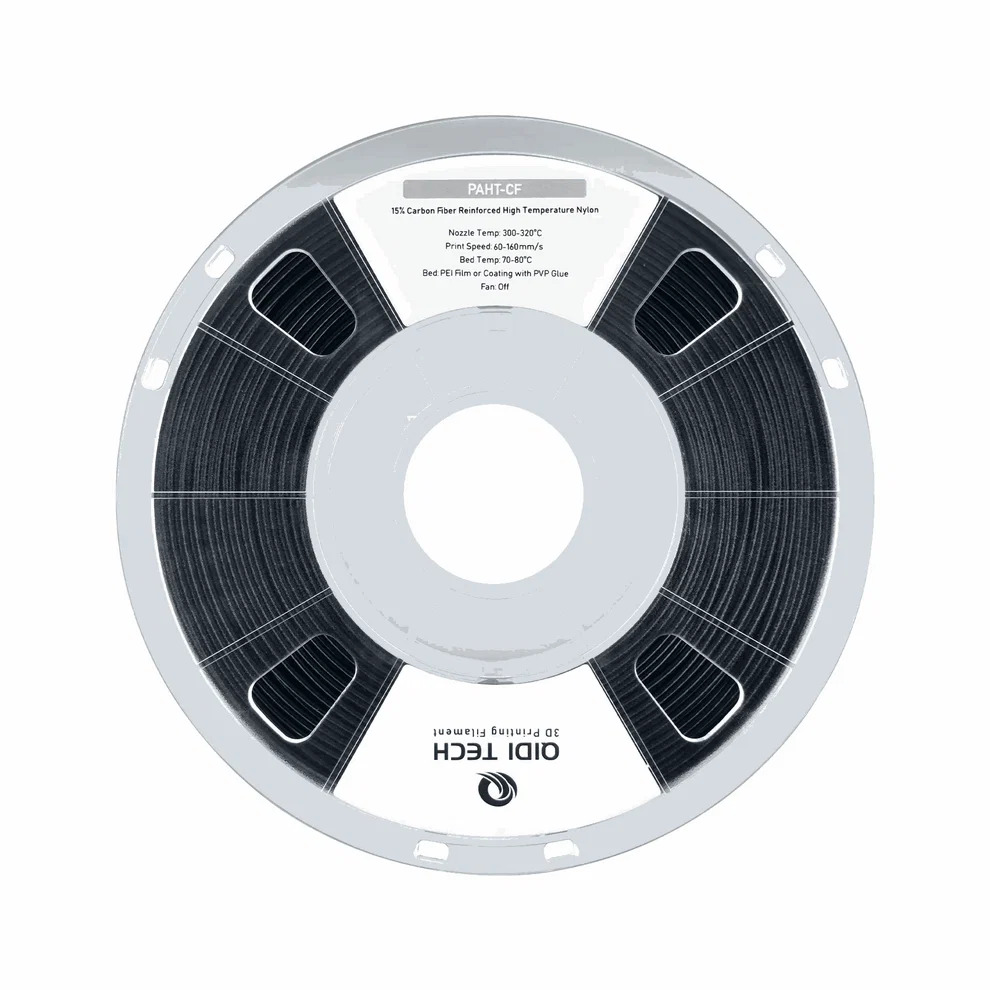
QIDI PAHT-CF (PPA-CF) Carbon Fibre Reinforced Nylon Filament – 1kg
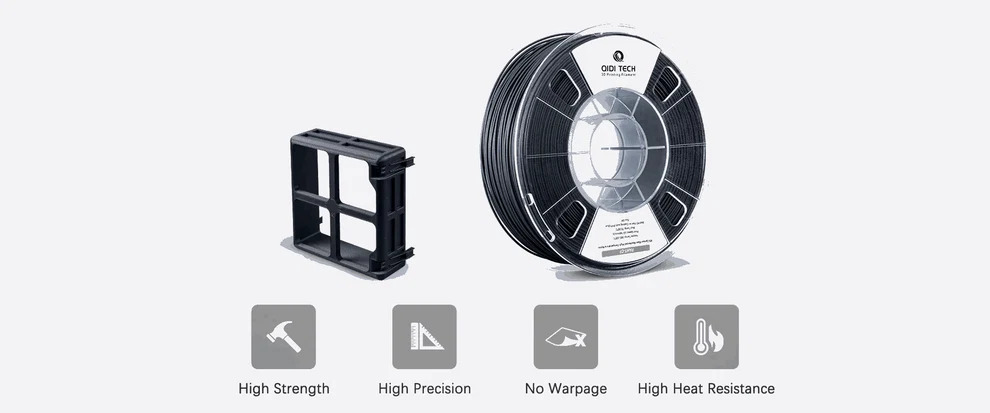
Elevate your 3D printing with QIDI PAHT-CF (PPA-CF) — a carbon fibre reinforced nylon filament engineered for exceptional strength, dimensional stability, and thermal resistance. Developed from QIDI UltraPA (PPA), this advanced material combines 85% high-temperature PPA nylon with 15% carbon fibre reinforcement for outstanding mechanical performance. Purpose-built for high-stress components, functional prototypes, and end-use industrial parts where reliability cannot be compromised.
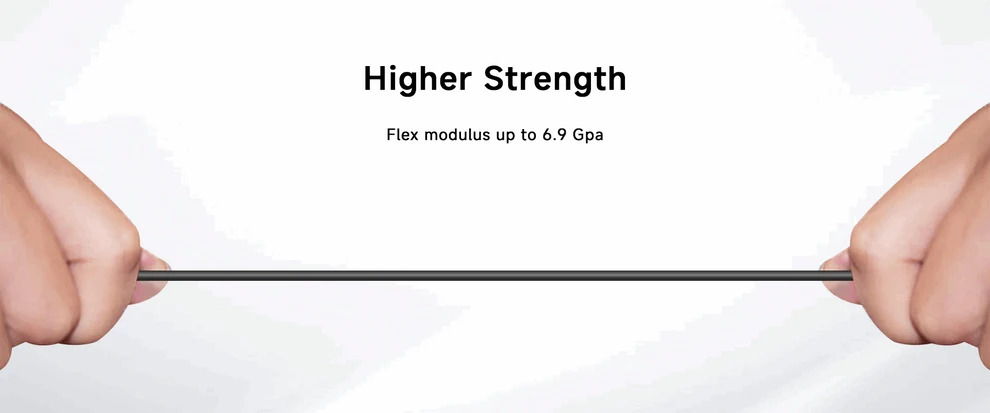
With a flexural modulus of 6.9 GPa, bending strength of 144 MPa, and a heat deflection temperature of up to 190.7°C after annealing, QIDI PAHT-CF delivers industrial-grade results that rival injection-moulded engineering plastics — all from the convenience of your FDM 3D printer.
Key Benefits
Reinforced Strength and Rigidity 15% carbon fibre reinforcement delivers superior tensile strength (93 MPa), stiffness (6.9 GPa flexural modulus), and durability. Designed for load-bearing, mechanical, and structural applications where performance under stress is essential.
Exceptional High-Temperature Performance Heat deflection temperature reaches 190.7°C after annealing, and the material withstands continuous use at temperatures up to 320°C. Ideal for components in automotive, aerospace, and industrial environments where standard nylons would deform or fail.
High Chemical and Oil Resistance Excellent resistance to oils, fuels, solvents, and industrial chemicals makes QIDI PAHT-CF a strong choice for under-hood automotive parts, chemical handling equipment, and industrial machinery components.
Smart Fibre Reinforced Technology QIDI’s proprietary Smart Fibre Reinforced Technology evenly disperses carbon fibres throughout the PPA matrix, creating a robust mesh skeleton structure that releases internal stress during printing. The result is enhanced layer adhesion, low warping, and excellent dimensional stability — even on large or complex geometries.
Low Moisture Absorption: Water absorption of just 1.37% ensures consistent extrusion and stable mechanical performance in both wet and dry environments. Prints maintain dimensional accuracy even in humid conditions when the filament is properly stored and dried.
Abrasion Resistance for Moving Parts Outstanding wear resistance makes this filament ideal for gears, bearings, bushings, and sliding components subjected to sustained friction and mechanical stress.
Outstanding Dimensional Stability Maintains shape and tight-tolerance precision during and after printing. Produces functional parts that meet real-world engineering specifications without excessive post-processing or compensation.
Reliable Performance in Wet and Dry Conditions QIDI PAHT-CF maintains good tensile and flexural strength in both wet and dry environments, giving confidence for parts exposed to varying conditions.
Technical Specifications
Material: PPA (Polyphthalamide) + 15% Carbon Fibre
Diameter: 1.75 mm ± 0.02 mm
Net Weight: 1 kg (2.2 lbs)
Density: 1.20 g/cm³
Tensile Strength: 93.15 MPa
Breaking Elongation Rate: 1.92%
Bending Strength: 144 MPa
Flexural Modulus: 6,727 MPa (~6.9 GPa)
Impact Strength: 10.37 KJ/m²
Heat Deflection Temperature (Unannealed): 84.8°C
Heat Deflection Temperature (Annealed): 190.7°C
Melting Temperature: 237°C
Water Absorption: 1.37%
Nozzle Temperature: 300–320°C
Bed Temperature: 70–90°C (use adhesive/glue)
Print Speed: 30–120 mm/s
Spool: High-temperature rated
Printer Requirements
All-metal hotend capable of reaching 300–320°C
Hardened steel or ruby nozzle required — carbon fibre is abrasive and will rapidly wear brass and copper-plated nozzles
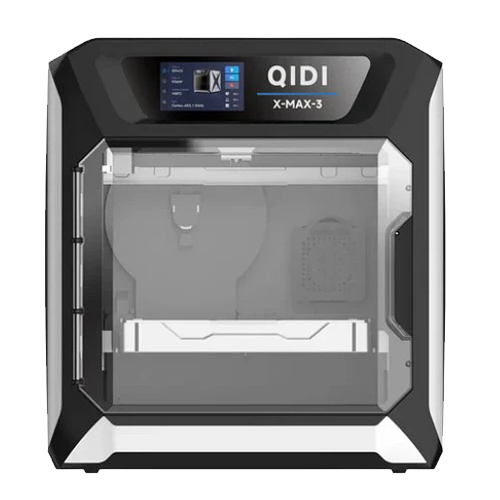
Enclosed printer required for stable temperature control and dimensional accuracy
0.4 mm nozzle or larger — 0.2 mm nozzles are not compatible
Direct-drive extruder recommended for best feeding reliability
Printing & Storage Tips
Drying (required): Dry at 80–100°C for 4–6 hours in a blast drying oven before printing
During printing: Keep filament in a dry box with below 15% RH for best results
Annealing (optional): Anneal printed parts at 80–100°C for 4–6 hours and cool naturally to room temperature for maximum heat resistance
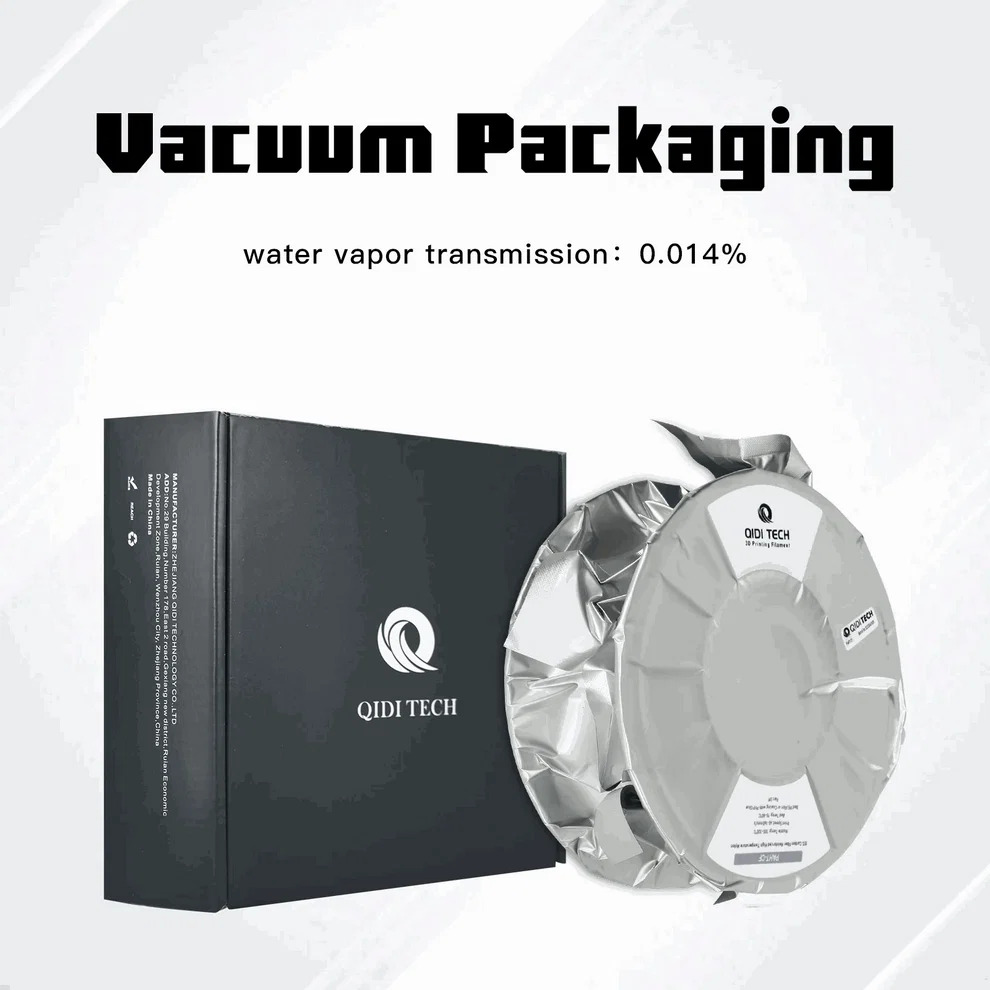
Storage: Return unused filament to the original vacuum aluminium foil bag and seal immediately — QIDI’s vacuum foil packaging has a water vapour transmission rate of just 0.014%, compared to 4.76% for standard sealed packaging
Ventilation: Print in a well-ventilated area for optimal results and safety
Ideal Applications
Aerospace and automotive components
Functional mechanical prototypes
Industrial fixtures, jigs, and tooling
High-temperature end-use parts
Structural frames, brackets, and enclosures
Gears, bearings, and wear-resistant moving parts
Chemical-resistant housings and enclosures
Under-hood automotive and engine-bay components
Whether you’re a professional engineer producing precision components or a serious maker tackling demanding projects, QIDI PAHT-CF delivers industrial-grade strength, heat resistance, and accuracy with the accessibility of desktop FDM 3D printing.
